
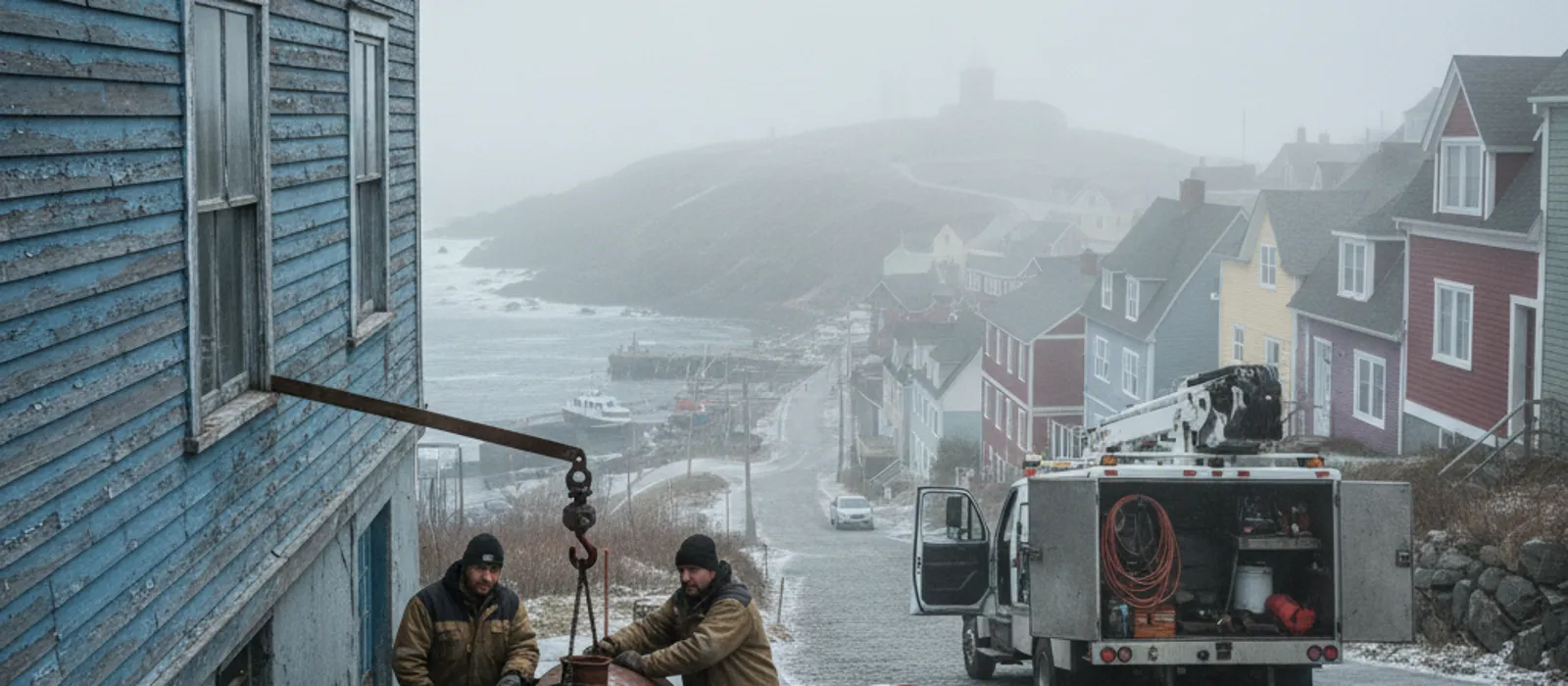
It’s half past ten on a January night, the wind is howling down Topsail Road, and the furnace just went quiet. You tap the gauge on the tank. It’s sitting on E.
If you ran out of heating oil tonight, here’s the good news. In most St. John’s homes you can be warm again inside an hour with a jerry can, a small wrench, and about fifteen minutes of patience. The bad news is that a dry tank has a habit of turning into a bigger job, and sometimes it turns up a problem you didn’t know you had.
One thing first. If you already know your tag has expired, skip the reading and call (709) 800-3117. The emergency line runs around the clock, and a refused delivery in the middle of winter is exactly what it’s there for.
Step 1: Make Sure You Actually Ran Out of Heating Oil
A furnace that stops on a cold night isn’t always out of oil. Before you go hunting for a jerry can, rule out the easy stuff.
Check the emergency switch first. Most oil furnaces have a red-plated switch at the top of the basement stairs or on the wall beside the furnace. It gets flipped by accident more often than you’d think. Check the breaker and the thermostat batteries while you’re at it.
Then go look at the tank. Float gauges on older steel tanks stick, and a gauge reading a quarter can be sitting on top of a tank with nothing in it. If you have an outdoor tank, pull the fill cap and dip it with a clean length of dowel. If the stick comes up dry, you have your answer.
One more test. Press the reset button on the burner once. Just once. If the motor runs but the burner doesn’t fire, or it fires for a few seconds and dies, air in the line or no oil is the likely culprit. If the motor doesn’t run at all, you have an electrical or control problem, and no amount of oil will fix it. That’s a call to a heating technician, not a trip to the gas station.
If the tank has oil in it and the burner still won’t take it, read our guide on a furnace that isn’t getting oil before you touch anything else.
Step 2: Check the HOST Tag Before You Call for a Delivery
This is the step most people skip, and it decides whether tonight is a small problem or a big one.
Every registered oil tank in Newfoundland and Labrador carries a metal HOST tag with a six-digit number and an expiry date stamped in month-year form. A tag reading “7-2028” means the tank can’t legally be used after 31 July 2028. The tag is usually wired to the tank or the fill pipe. Read it now, before you call anybody.
Here’s why it matters. Under the province’s Heating Oil Storage Tank System Regulations, a delivery driver isn’t allowed to put oil into a system without a valid, unexpired registration label. If the tag is expired, the driver also has to report it to the owner and the government. So a truck can show up at two in the morning, read the tag, and drive away with your oil still on board.
Picture a homeowner in Mount Pearl finding this out the hard way. The tank runs dry on a Sunday afternoon, they call for an emergency delivery, and the driver reads a tag stamped 11-2025 and leaves. They’d been buying oil all fall for a tank that had been illegal since the first of December, and nobody had noticed. A new 200-gallon steel tank, with the old one hauled away, comes to $3,200. The truck comes back once the installer’s licensed inspector has tagged and registered the new one.
If your tag is expired, or expires this month, stop here and skip down to the section on replacement, because no supplier on the Avalon is going to fill that tank. If the tag is good, carry on.
Not sure you’re reading the tag right? Take a photo and send it through the contact form. We’ll tell you in plain language whether you’re fine or whether you need a new tank before the next delivery.
Step 3: Emergency Fuel, Then Bleed the Line and Restart
Furnace oil in this province is basically dyed diesel. Regular diesel from the pump at any gas station will run your burner for a night or two without hurting it. Kerosene works too. Gasoline never does. It’s not a cheap shortcut, it’s a house fire.
Take a clean jerry can and buy 20 to 40 litres. A can that’s had gasoline in it doesn’t count as clean. Two cans are better than one, since more fuel above the outlet means less sludge pulled into the line.
Pour it into the fill pipe, the capped pipe on the outside wall or on top of the tank. Use a funnel. Don’t pour it down the vent pipe, which is the one with the whistle in it. Then wait 10 to 15 minutes. When a tank runs dry, the sludge and water on the bottom get churned up, and letting things settle keeps the worst of it out of your filter and nozzle.
Once there’s fuel in the tank, the burner still has a line full of air between the tank and the pump. Air is what stops it firing. Bleeding pushes that air out, and most homeowners can do it with a small wrench and a coffee can.
- Turn the furnace off at the emergency switch. Don’t skip this.
- Find the fuel pump on the burner, the small squarish unit where the oil line comes in. Look for the bleeder valve, a small hex fitting on the side of the pump, often with a short nipple on it.
- Put a container under the bleeder and keep rags handy.
- Loosen the bleeder about a quarter turn with the wrench. Don’t remove it.
- Turn the furnace back on and press the reset button once. The pump will push out air, then foamy oil, then clear oil.
- As soon as you see a steady stream of clear oil with no bubbles, tighten the bleeder. The burner should light within a few seconds.
- If it fires and runs, watch it through a full heating cycle and check the bleeder for drips.
If it doesn’t light, wait a couple of minutes and try one more time. That’s it. Two resets. Every time you press reset without the burner firing, the pump sprays more oil into the combustion chamber, and a chamber full of unburned oil can light off with a bang that damages the furnace. Stop after two.
Some newer burners prime themselves, and some basement tanks feed the burner by gravity so the line fills on its own. If you don’t see a bleeder valve, or the pump looks nothing like what’s described here, don’t guess.
Stop and call a professional if you smell strong oil or see smoke, if the burner lights and cuts out again and again, if you can’t find or open the bleeder, if there’s oil on the floor under the furnace, or if you’ve pressed reset twice with no luck. A jerry can is a stopgap, so book a proper delivery for the morning before you go to bed.
Why Running Out of Heating Oil Causes Trouble Later
Getting the furnace lit tonight is only half the job. A dry tank stirs up three things that can come back to bite you over the following weeks.
Sludge. Every steel tank builds up a layer of muck from years of oil, condensation and rust. It sits harmlessly on the bottom until the pump starts sucking from the dregs. That sludge heads for the filter, then the nozzle. If your furnace runs fine for a week after the refill and then starts short-cycling, the filter is the first suspect. Sludge in an oil tank is one of the main reasons old tanks get condemned at inspection.
Water. Condensation collects in a tank that sits half empty through a damp Avalon summer. Water is heavier than oil and pools at the bottom, and a tank that ran dry pulls it straight into the line. In a cold snap it can freeze in the line and stop the flow all over again.
Rust. A tank running on fumes exposes more of the inside wall to moist air. On a tank near the end of its allowed life, this is often when a small weep at the bottom seam becomes a drip on the pad.
Take an outside tank in Kelligrews that runs dry in a February blow. Diesel in, line bled, furnace fired. Ten minutes later it quits. The owner bleeds it again, it fires again, it quits again. The filter is packed solid with sludge the dry tank stirred up. A new filter gets them through the week, but when the installer comes out to Conception Bay South to look at the tank, the bottom seam is pitted and weeping. They go with a fibreglass tank, $3,850 installed with the old one gone, and the new tag is stamped decades out.
When Running Out Turns Into a Tank Replacement
Sometimes a run-out is just a run-out. Sometimes it’s the day you discover your tank has been illegal for eight months. Here’s how the costs line up, using published Atlantic Canada retail rates that include hauling away the old tank.
| Situation | What has to happen | Cost (CAD) |
|---|---|---|
| Tag valid, tank empty | Emergency fuel, bleed the line, book a delivery | The price of the oil |
| Tag expired, outside steel tank | Replace with a 200-gallon painted steel tank | $3,200 installed |
| Tag expired, want the longest life | Replace with a fibreglass tank, inside or out | $3,850 installed |
| Basement tank, want double containment | Roth double-wall tank, inside | $3,850 installed |
| Heat pump home, small backup tank | 100-gallon painted steel tank | $3,100 installed |
| Leaving oil behind, outside tank | Remove and dispose of the old tank only | $500 |
| Basement tank removal | Quoted case by case | Depends on access |
Emergency and after-hours premiums vary by contractor, so ask before you book. The installer’s licensed inspector tags and registers the new system.
Under the regulations, once a tank is disconnected you have 30 days to empty it, remove the sludge and leftover oil, dismantle it, cap the piping and tidy the site. If the tank leaked, that window shrinks to 10 days. That’s why replacement quotes on the Avalon almost always include removal, and why you shouldn’t leave the old tank sitting beside the house “for now”.
Plenty of homes in Paradise have a heat pump and only keep the oil for the coldest weeks. When the truck refuses an expired tank in December, the owner is weighing a $3,100 100-gallon backup tank against running the heat pump alone through a Paradise January. Most keep the oil.
If a driver has refused your tank, our expired tank emergency service covers exactly this situation, and our oil tank replacement page explains how a swap goes from first call to new tag. The full breakdown is in what a replacement costs.
If you’ve read your tag tonight and your heart sank, call (709) 800-3117. Estimates are free and in writing, and we’ll tell you straight what your options are.
How to Never Run Out of Heating Oil Again
Running out once is bad luck. Running out twice is a system problem. A few habits fix it for good.
Get on automatic delivery. Suppliers estimate your burn from the weather and show up before you’re low. For most households it’s the easiest fix there is.
Follow the quarter-tank rule. Call for a delivery when the gauge hits a quarter, not an eighth. In a January cold snap a tank drops faster than you expect, and trucks get backed up when the whole street is calling.
Don’t trust a single gauge reading. Dip the tank once a month in winter. A stuck float has caught out plenty of careful people.
Keep the tank full through summer. Less air space means less condensation and less water at the bottom for next winter’s run-out to stir up.
Change the filter every year, ideally at the fall tune-up. A fresh filter shrugs off the bit of sediment a low tank stirs up.
Check the tag every fall and write the expiry date on the calendar. If it expires during the heating season, book the replacement for late summer, when you’re not choosing a tank in a panic.
Frequently Asked Questions
Can I put diesel in my oil tank if I ran out of heating oil?
Yes. Furnace oil and pump diesel are close cousins, and 20 to 40 litres of diesel will run a residential burner for a night or two without harm. Use a clean can, pour it into the fill pipe, and wait 10 to 15 minutes before restarting. Never use gasoline, and book a proper delivery for the next morning.
Why won’t the oil company deliver to my tank?
The most common reason is an expired HOST tag. Provincial regulations prohibit delivering heating oil to a tank system without a valid registration label, and the driver has to report an expired tag rather than fill it. Other reasons include a visible leak, a rusted-out stand, or a tank that’s been disconnected. Our guide to refused deliveries walks through each one.
How many times can I press the reset button on my furnace?
Once, and one more time after a couple of minutes if it doesn’t fire. After that, stop. Each failed reset pumps more unburned oil into the combustion chamber, and a chamber full of oil can ignite with enough force to damage the furnace. If two tries don’t do it, the problem isn’t air in the line, and a technician needs to look at it.
Do I need a new tank just because it ran dry?
No. Running out doesn’t damage a sound tank. What it does is stir up sludge and water and, sometimes, reveal that the tank was already at the end of its life. If the tag is valid and there’s no weeping at the seams or rust at the bottom, a refill, a bleed and a fresh filter are all you need. If the tag is expired or you can see rust, the tank has to go no matter what’s in it.