The driver read your tag and drove off, or there's a wet spot under the tank and the basement smells of oil. Call (709) 800-3117 any hour and we'll walk you through the next steps, then get a new tank in, usually within the week.
An expired oil tank in Newfoundland turns from paperwork into a real problem the minute the fuel truck pulls up. The driver reads the HOST tag, sees a date that's already passed or spots rust, a leaning stand or a weeping fitting, and under NLR 60/03 they can't fill you and have to report what they found. In a St. John's January, that's a no-heat emergency by suppertime.
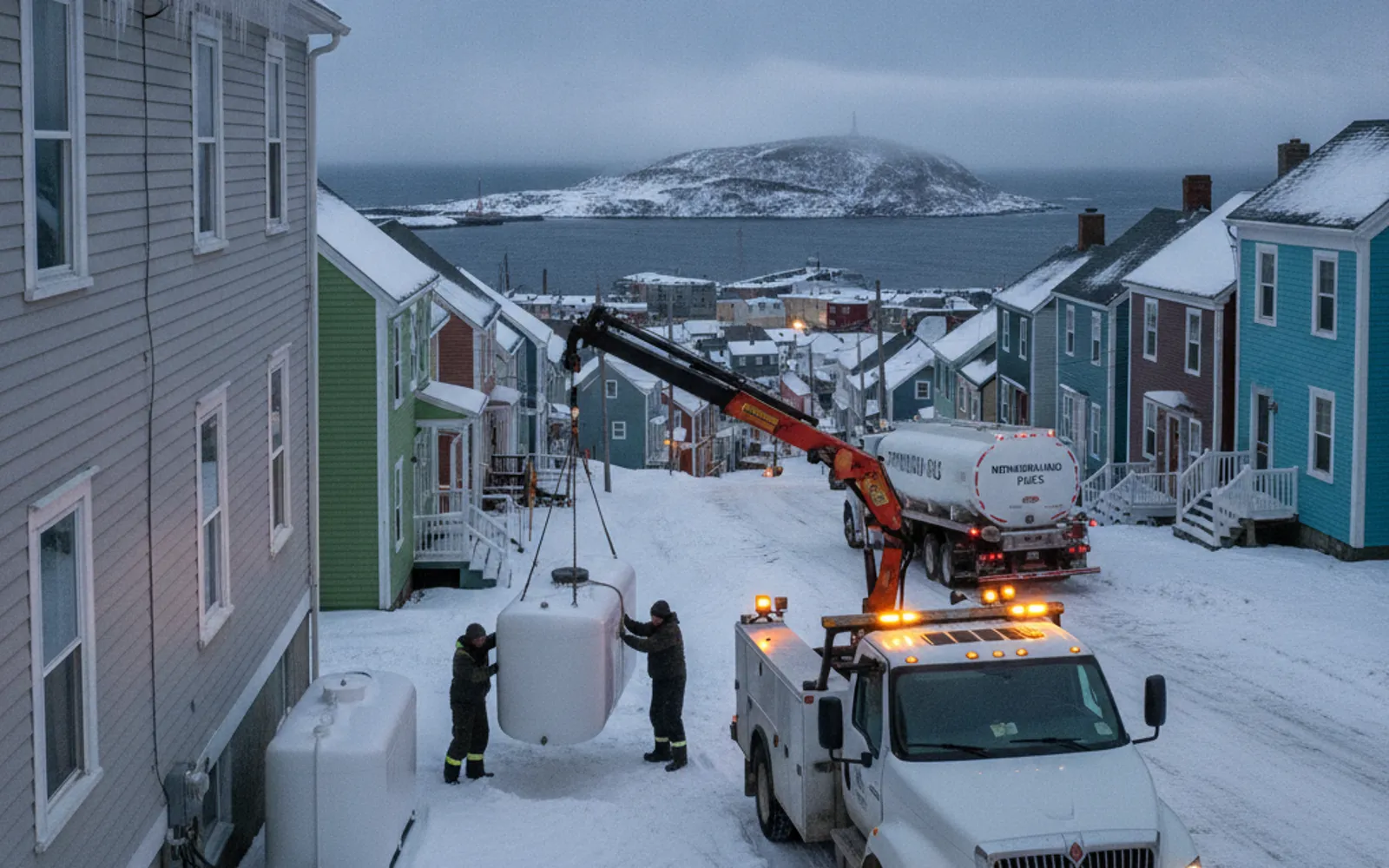
Harbour Tank Co answers expired-tag and leaking-tank calls 24/7 across St. John's and the Avalon Peninsula. We'll tell you what to shut off and what to leave alone on the phone, then get a crew out to swap the tank or deal with the leak. A new 200-gallon steel tank is $3,200 installed with the old one hauled away, and every job starts with a free written estimate. Call (709) 800-3117, or keep reading for what to do while you wait.
A refused delivery at 4 pm on a Friday or an oil smell at midnight gets a real person at (709) 800-3117. We'll tell you what to shut off, what to leave alone, and when we can be there.
Under section 13 of NLR 60/03 the driver can't fill an expired or deficient tank, full stop. We swap the tank, the installer's licensed inspector tags and registers it, and you rebook your delivery with a current date on the tag.
Tell us what you see and smell and we'll help you work out whether it's a drip at a fitting or a tank shell letting go. That decides whether you need us tonight or first thing tomorrow.
After a leak, section 18(5) gives you 10 days to empty, dismantle and dispose of the tank. We book the removal inside that window so the deadline isn't sitting on your shoulders.
After a big Avalon blow we'll look at the legs, the pad, the fill and vent pipes and the line to the furnace, then tell you plainly whether the tank is safe to run until it's replaced.
A steel tank is $3,200 installed, fibreglass is $3,850, and outdoor removal on its own is $500. After-hours premiums vary by contractor, so any extra goes in the written estimate before the work, not on the bill after.
Every registered oil tank in the province carries a metal HOST tag with a six-digit number and an expiry stamped as MM-YYYY. A tag that reads 7-2028 means the tank can't be used after 31 July 2028. Under section 13(1) of the Heating Oil Storage Tank System Regulations, a fuel company can't deliver to a system without a valid, unexpired registration label.
Section 13(2) goes one step further. If the driver spots a deficiency, whether that's an expired tag, rust through a seam, a broken stand or oil weeping at a fitting, they have to report it right away to you and to the province. So the driver isn't being difficult, they're following the rules, and some homeowners only find out from a slip left on the door.
The fix is the same either way: a new tank, tagged and registered by the installer's licensed inspector, and a fresh delivery booked. Our oil tank replacement page covers the swap step by step, and the refused delivery post walks through what to say to your fuel company in the meantime.
If the tank is empty and the furnace is off, a St. John's house loses heat fast in January. Call (709) 800-3117 first so we can get you on the board, then work through this list while you wait.
We replace 200-gallon steel tanks for $3,200 installed and fibreglass for $3,850, both including removal of the old tank. Once the new tag is on, call your fuel company back, tell them it's a no-heat call, and rebook. If you keep oil only as backup for a heat pump, a 100-gallon tank at about $3,100 may be the right size.
A faint oil smell in the basement after a delivery is common and usually fades by the next day. A strong smell that hangs around, a dark patch under the tank, oil in the snow, or a sheen in a nearby ditch is a leak until proven otherwise. The oil smell post covers the difference in more detail.
Containment comes first. Shut the furnace off, close the valve at the tank outlet if you can reach it without kneeling in oil, and put cat litter, sand or absorbent pads under the drip. Keep kids and pets out of the area, open a window if the smell is indoors, and put out any pilot lights or open flames nearby.
Then call us. We'll pump out what's left, remove the tank and get a new one in. Outdoor tank removal on its own is $500, and indoor or basement tanks are quoted case by case because access and cleanup vary so much from house to house.
After a leak or water getting into the tank, section 18(5) of NLR 60/03 shortens the removal timeline. You have 10 days to empty the tank, remove the sludge and leftover oil, dismantle and dispose of it, cap or remove the piping and restore the site, plus 30 days for remediation of any contaminated soil or floor. A planned disconnect gets 30 days under section 16(3). We book leak removals inside that 10-day window, and our oil tank removal page explains what removal covers.
Two phone calls matter on day one. Report the spill to the province's environment department, and call your home insurer the same day. Insurers often ask for the confirmation of registration on the tank, so have your tag number handy, and take dated photos of everything before cleanup starts. The leaking tank post has a checklist you can print.
Wind is the other emergency we see on the Avalon. After a big blow, walk out and look at the tank: legs shifted or sunk, the tank tilted on its pad, a vent or fill pipe bent or snapped, siding or shingles lying across the copper line, or a fresh smell of oil. Coastal homes in Torbay, Conception Bay South and Portugal Cove-St. Philip's get the worst of it. If anything has moved, shut the outlet valve and call before running the furnace.
If a storm has damaged a tank that was close to expiry anyway, it's often worth going straight to a fibreglass tank. It doesn't rust in salt air, and the province caps its service life at 50 years instead of the 10 to 25 years steel gets. Our cost guide lays out both prices side by side.
The tag shows the last month the tank can legally be used, stamped as MM-YYYY, so 7-2028 means no use after 31 July 2028. Under NLR 60/03 section 15, the common outdoor single-wall 14-gauge steel tank with an end outlet gets 10 years, and the longest any mild-steel tank gets is 25 years indoors. Fibreglass and double-wall tanks are capped at 50 years. Our HOST tag post shows where to find yours.
Yes, and they have to. Section 13(1) of the regulations bars delivery to a tank without a valid, unexpired registration label, and section 13(2) makes the driver report a deficiency right away to the owner and the province. Once a new tank is tagged, usually within the week for $3,200 installed, you rebook the delivery. Call (709) 800-3117 to start.
Ten days. Section 18(5) of NLR 60/03 says that after a leak or water intrusion the tank must be emptied, cleaned of sludge, dismantled, disposed of and the piping capped within 10 days, with 30 more days allowed for remediation. A planned disconnect gets 30 days under section 16(3). Outdoor tank removal is $500, and indoor tanks are quoted case by case.
Report it to the province's environment department and call your home insurer the same day. Have the six-digit tag number, the expiry date and dated photos of the tank and the spill ready. Then call us at (709) 800-3117 so the pump-out and removal are booked inside the 10-day window.
After-hours premiums vary by contractor, so we tell you before we roll a truck and put it in the written estimate. The tank prices themselves don't change: $3,200 for a 200-gallon steel tank installed, $3,850 for fibreglass, both with the old tank removed, and $500 for an outdoor removal on its own. Phone triage at (709) 800-3117 costs nothing.
Free written estimates. Emergency calls answered around the clock.